Brightmine (formerly Cendex) vs HR Datahub - Which is Best for Salary Benchmarking?

Brightmine Compensation Planning and HR Datahub both help UK businesses benchmark salaries, but they serve different strategic needs.
Brightmine (formerly Cendex) provides compensation architecture: employer-submitted survey data for building pay structures and frameworks. HR Datahub provides live market signals from job adverts that help teams set offers, manage hiring surges, and keep up with market movement as it happens. It also helps to keep your pay positioning aligned between survey cycles.
I've compared them across the five categories that matter most when you're deciding where your salary benchmarking evidence comes from, so you can choose the right fit for your business with confidence.
Who should choose what?
Choose Brightmine Compensation Planning if:
- You need employer-reported survey data for structured reward work
- Regular refresh cycles are acceptable for governance needs
- Broad market benchmarking and consistent methodology matter most
- You have reward specialists and processes in place
- You want stable comparators for pay structures and pay reviews - check out our pay structures guide and our pay review guide for the practical differences.
Choose HR Datahub if:
- You need continuous live market insights between survey cycles
- You want to validate pay positioning against current advertised salaries
- You need granular UK location data by role and level
- You want accessible market data that doesn't require specialist reward expertise
- You need pay decisions that stay aligned with current market reality, not outdated assumptions, as competitive pressure builds and the market shifts
Essentially, if you're building compensation architecture (formal pay structures, grading frameworks), start with Brightmine.
If you need live market insights to maintain competitive positioning and validate pay decisions, HR Datahub provides the strategic layer that keeps you aligned between survey cycles.
Many organisations use both: salary surveys for compensation architecture, market signals for live market insights.
How have we compared Brightmine vs HR Datahub?
We've broken down the comparison across five categories:
- Data freshness and coverage
- Ease of use and accessibility
- Customisation and granularity
- Cost and return on investment
- Integration and reporting
How the scores work
Our scores are intended to help guide your decision. They're not scientific truth, though we've tried to be as fair and objective as possible. Scores are relative to the alternative in this article, not absolute ratings.
Here's what the scores mean:
- 10/10 = best-in-class for most mid-to-large UK employers in that category
- 5/10 = workable, but with meaningful constraints for typical use
- 1/10 = not a realistic fit for that need
For a broader overview, check out our guide to salary surveys. If you're trying to formalise how market data feeds into pay decisions, read our guide to using live market data in your salary review process for a practical workflow you can replicate.
Brightmine vs HR Datahub – Detailed comparison
Data freshness and coverage
These datasets use different units (employer-submitted pay vs advertised salary ranges), so we've scored on decision usefulness rather than volume.
Brightmine: 5/10
Why this score: Strong credibility and participation breadth, but Brightmine is survey-led, so updates depend on the dataset and release cycle – it's not 'live' market data.
Brightmine gathers data from UK organisations participating in their surveys. This gives solid sample sizes for mainstream roles in established sectors.
Employers submit actual payroll figures, so you're benchmarking against what organisations genuinely pay, not advertised ranges. Coverage includes base pay, variable pay, allowances, and benefits packages.
The main limitation is timeliness. Survey data collection cycles mean the data reflects pay levels from when the survey was collected. If market conditions shift between cycles, you won't know about it until the next round of data becomes available.
HR Datahub: 9/10
Why this score: Continuous live market insights from advertised salary data. Excellent breadth for operational and mid-tier roles.
HR Datahub provides live market signals from job adverts, with data collected daily and refreshed weekly. You're seeing what employers are advertising right now, not months ago. This provides continuous live market insights, particularly valuable for maintaining competitive positioning and for keeping pay decisions grounded in current market reality rather than outdated assumptions.
Coverage is strong for mid-management and below, operational roles, and high-volume hiring sectors like retail, logistics, and hospitality. Because the dataset is based on job adverts rather than survey catalogues, it picks up niche or emerging roles as soon as they appear.
The trade-off is the reliance on advertised salary ranges rather than actual employee data. Less suited to formal governance requiring audit-grade evidence, though excellent for validating pay positioning against current market activity.

Verdict
Brightmine is best for: Annual pay reviews, formal benchmarking governance, senior roles, building compensation architecture.
HR Datahub is best for: Maintaining competitive positioning between survey cycles, validating pay decisions, live market insights.
Ease of use and accessibility
Brightmine (formerly Cendex): 6/10
Why this score: Powerful if you know how to use it, but requires specialist knowledge.
Brightmine is built for reward specialists who understand levelling methodologies and job catalogues. The platform provides filtering by industry, organisation size, sector, and function.
You can upload data and generate benchmarking reports relatively quickly. The challenge for generalist HR teams is that survey-based platforms assume you can map internal roles to their predefined catalogue.
HR Datahub: 8/10
Why this score: Accessible pay insights without requiring specialist reward expertise.
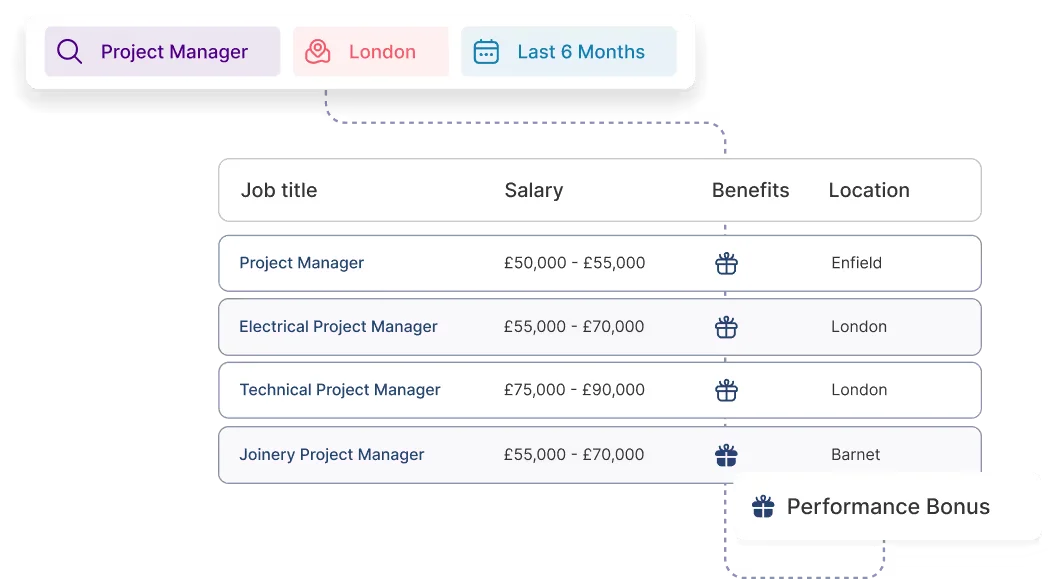
HR Datahub uses keyword search rather than fixed catalogues. You search for roles as you'd describe them, filter by location and salary range, then export results. You get answers specific to the role, location and seniority you searched, so you can size pay with confidence rather than guesswork.
This makes live market insights accessible to HR generalists and talent acquisition teams who need strategic pay context without specialist training.
Verdict
Brightmine is best for: Organisations with dedicated reward teams who understand survey methodology.
HR Datahub is best for: Teams that need market insights without specialist reward support, organisations where multiple stakeholders need pay data access.
Customisation and granularity
Brightmine (formerly Cendex): 8/10
Why this score: Excellent for structured benchmarking with formal job matching.
Brightmine offers strong filtering by industry, organisation size, sector, and function. This is particularly valuable when you need peer group comparability for governance or pay equity work.
The platform excels at structured benchmarking where consistency matters. If you're building pay bands across multiple job families, Brightmine provides the depth and categorisation to support that framework.
Coverage is constrained by which roles participate in the survey. Emerging roles or niche positions may have insufficient sample sizes to disclose data.
HR Datahub: 7/10
Why this score: Flexible pay information and insights without catalogue constraints. Strong on granular UK location data.
HR Datahub provides granular UK location cuts and role keyword flexibility. This works well when roles don't fit traditional catalogues and you need hyperlocal live market context.
For example, if you're validating pay positioning in Reading versus Birmingham, you can filter by town or region to see how advertised pay varies geographically. The platform is particularly strong for operational roles and fast-evolving positions.
Job levelling is built in across six seniority levels, scored from the advert, so roles map to a consistent structure without a formal job-evaluation exercise. This works well for most salary benchmarking use cases and gives you a defensible structure to stand behind. The remaining limit is that levelling reads the advert, so it does not weight organisational context the way a formal job-evaluation system would.
Verdict
Brightmine is best for: Building pay bands, grading structures, benchmarking complex senior roles.
HR Datahub is best for: Flexible live market insights, hyperlocal salary data, emerging or niche roles.
Cost and return on investment
Brightmine (formerly Cendex): 6/10
Why this score: Great value for large, structured reward programmes. Less cost-effective for smaller teams.
Brightmine operates on custom pricing based on organisation size and modules required. Pricing varies by package and requirements.
ROI justification works when you need comprehensive reward benchmarking that supports structured pay frameworks and governance requirements. For large organisations with dedicated reward teams running annual pay reviews, the investment makes sense.
For mid-market businesses without specialist reward functions, survey implementations can be more than you need when you primarily require up-to-date salary data rather than full compensation architecture.
HR Datahub: 8/10
Why this score: Defensible, current pay evidence you can act on directly, without consultancy overhead.
HR Datahub uses subscription pricing, so you're paying for direct access to live pay evidence rather than consultancy-led delivery. That access runs all year round, so you can benchmark and defend pay decisions between survey cycles, not just at survey time.
ROI comes from making pay decisions on defensible, current evidence rather than leaning on consultancy-led survey work. Benchmark roles against live pay evidence through the year, calibrate pay during hiring surges, and keep your positioning aligned with the market between survey releases.
Verdict
Brightmine is best for: Large enterprises with dedicated reward teams and formal job architecture.
HR Datahub is best for: Organisations that need continuous, defensible live pay evidence all year round to keep pay decisions aligned between survey cycles.
Integration and reporting
Brightmine (formerly Cendex): 7/10
Why this score: Strong reporting and analytics, though integration typically requires manual work.
Brightmine provides data exports and reporting tools designed for cyclical reward workflows like annual pay reviews. You can export benchmarking data to Excel for further analysis or presentation to leadership.
The platform fits naturally into structured compensation planning cycles where reward teams need repeatable reports and peer group comparisons.
HR Datahub: 7/10
Why this score: User-friendly exports for strategic decision-making with minimal workflow friction.
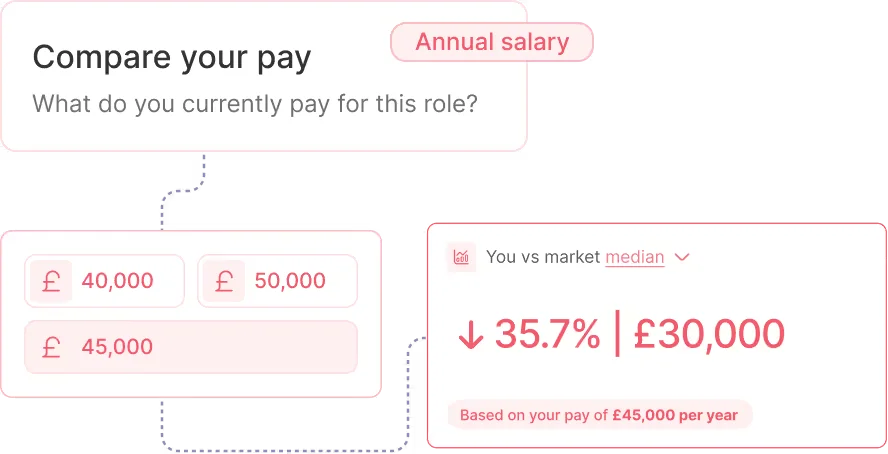
HR Datahub allows you to export market insights and share insights with hiring managers or leadership for strategic pay decisions without IT support.
This makes it practical for confident pay decisions, grounded in current market evidence, that teams can slot into existing processes without technical overhead.
Verdict
Brightmine is best for: Annual compensation planning cycles, formal pay reviews.
HR Datahub is best for: Ongoing workflows, real-time market insights, teams that need to export and share evidence without IT involvement, strategic pay validation between survey cycles.
Final verdict: Should you choose Brightmine or HR Datahub?
If you need to build compensation architecture – job matching, levelling, and pay structures you can stand behind in annual reviews – then Brightmine provides the foundation. If you need live UK market insights to maintain competitive positioning, validate pay decisions, and respond to market movement between survey cycles, HR Datahub provides the strategic layer that keeps your organisation aligned with current market conditions.
HR Datahub will help make your operations smoother by:
- Preventing offer rejections
- Avoiding lagging pay bands
- Supporting mid-cycle corrections
- Responding to fast-moving hiring markets
For larger organisations, the best answer is often both. Use Brightmine for compensation architecture, then use HR Datahub for live market insights that keeps you competitively positioned between survey releases.
Frequently Asked Questions
Which is better for UK salary benchmarking: Brightmine or HR Datahub?
The best tool for UK salary benchmarking depends on your strategic needs. Brightmine is stronger for building compensation architecture with complex pay structures and dedicated reward teams. HR Datahub is better for continuous live market insights that helps maintain competitive positioning between survey cycles.
Is Cendex the same as Brightmine?
Yes. Cendex is now Brightmine Compensation Planning following a rebrand in 2024. The platform works the same way – survey-based benchmarking with employer-submitted data – but operates under the Brightmine brand.
What's the difference between Brightmine survey data and real-time salary benchmarking?
Brightmine uses traditional pay surveys collecting actual employee salary data from participating companies on survey cycles. HR Datahub provides live market insights from advertised salary ranges, calculated from live job ads daily and refreshed weekly. Survey data is better for structured reward frameworks. Live advertised ranges are better for urgent hiring decisions, and for making pay decisions whether you're at the end of a cycle or in the middle of one.
Still deciding between Brightmine and HR Datahub? Use these tie-breakers
If you're close to choosing between the two, these questions usually settle it:
- Do you need to benchmark beyond base pay (bonus, allowances, benefits) and defend decisions with a consistent methodology?
- Brightmine is usually the better fit.
- Are you hiring into roles where advertised pay moves quickly (operational, fast-evolving, high-turnover)?
- HR Datahub gives you current, role-specific evidence to sense-check pay against the live market.
- Is this for an annual pay review cycle with grades/bands and stakeholder governance?
- Brightmine tends to align better.
- Is this for day-to-day hiring and offer calibration or benchmarking without being tied to annual cycles?
- HR Datahub is often more practical.
- Do you need both? Many organisations use HR Datahub for offer checks grounded in live pay evidence and Brightmine for structured pay review cycles
See how HR Datahub works
HR Datahub provides live market insights from live UK job adverts, with data collected daily and refreshed weekly. Whether you're validating competitive positioning, planning pay reviews, or maintaining pay alignment between survey cycles, the platform gives you defensible, current pay evidence to stand behind every decision.
Book a call to talk your pay decisions through with our salary experts, or explore the features to see how HR Datahub benchmarks your roles against live pay evidence.
LATEST WEBINAR
.avif)
Guides, templates and tools to help you approach pay with more confidence, clarity and consistency.


Read through more blogs
%2520(1).avif)






.avif)


.avif)
.avif)

.avif)





.avif)

.avif)
.avif)
.avif)
.avif)
.avif)
.avif)
.avif)
.avif)