PayScale Competitors: The Best Alternatives for UK HR Teams in 2026


The median UK pay award for 2026 is sitting at 3%, according to our 2026 Pay Trends Survey of more than 200 UK organisations. When the headline number is that tight, the margin for getting a benchmark wrong gets tight with it.
That's the problem with running UK pay decisions through a tool built for the US market. PayScale is a capable platform, but its centre of gravity is American, and a lot of UK HR and Reward teams find that out the hard way once they're already paying for it.
This guide compares the PayScale alternatives that actually fit UK mid-market HR teams, judged on the criteria a UK HR or Reward lead actually cares about. If you want a broader view, our salary benchmarking tools guide covers the wider market. HR Datahub is featured in this list and is its publisher.
PayScale alternatives at a glance
UK data coverage and data methodology are the two criteria most PayScale comparisons leave out, and they're the two that decide whether a tool is of any use to a UK team. Here's how the six compare before the detail.
What to look for in a UK salary benchmarking tool
Four criteria decide whether a tool earns its place for a UK team:
- UK data coverage: does it hold depth on your sectors and regions, or thin out off head-office roles?
- Data freshness: how recently the numbers were gathered? Because a survey can be months stale by the time you act on it.
- Methodology: can you defend your choices when a finance director asks where the figure came from?
- Pricing: does it fit a mid-market budget without a full enterprise survey contract?
Weight them against your own roles and sectors as you read the reviews below.
Best PayScale alternatives for UK HR teams, reviewed
I've reviewed each tool the same way: what it does well, who it suits, and where it falls down. I've gone on what real users report, so you get a straight read on fit.
HR Datahub - Best for: defensible UK pay decisions based on live job advert data
HR Datahub gives UK teams a defensible basis for pay decisions, built on live job advert data rather than an annual survey. You search for a role, filter by location and keyword, and see what the market is advertising right now. When a hiring manager pushes for more, or a finance director questions an offer, you have a current number you can stand behind. Salary surveys benchmark what was; we benchmark what is.
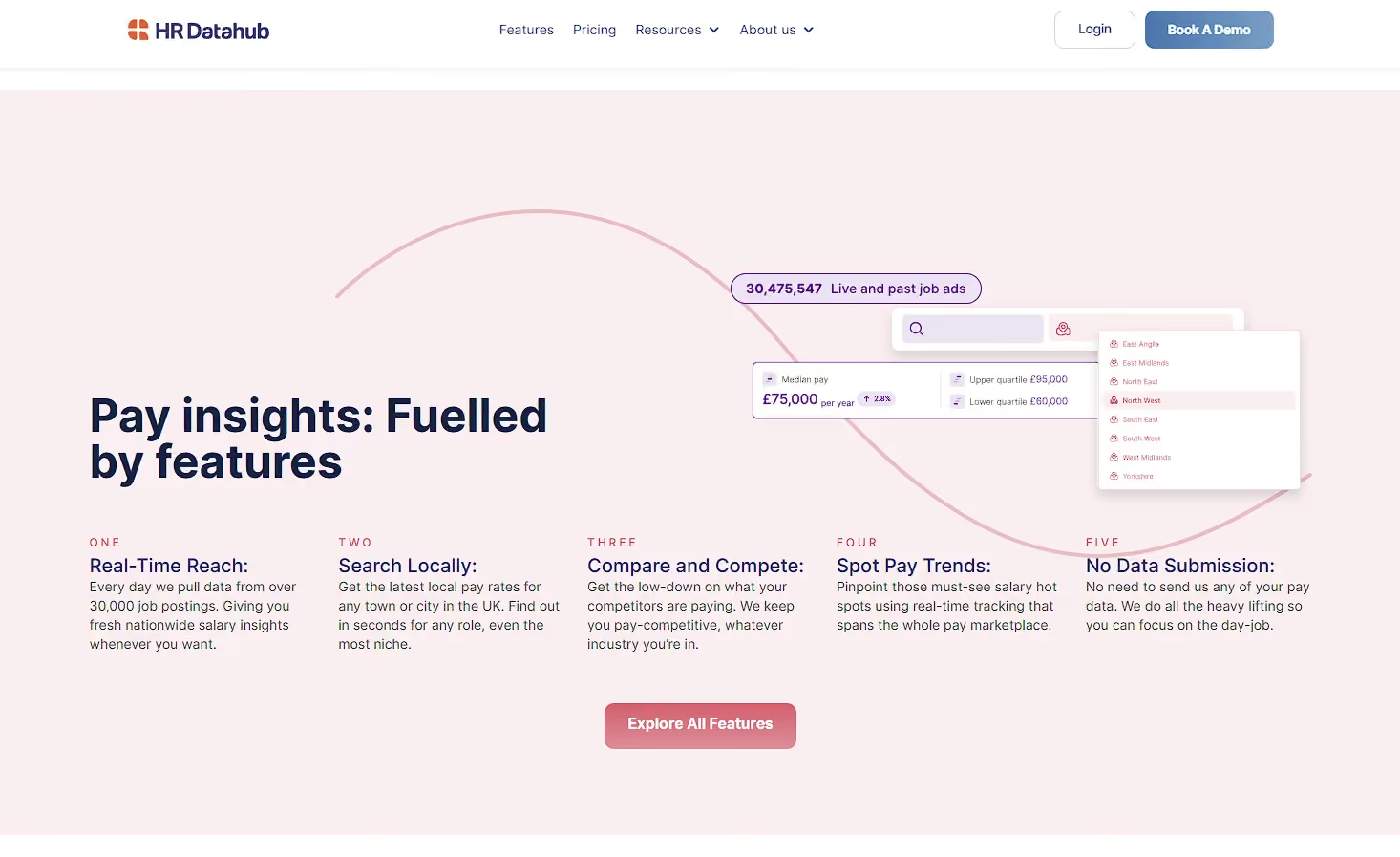
The reason that matters: pay isn't one decision a year. It's hundreds of them, across every role and location, feeding the biggest cost most businesses carry. Get them wrong at scale and it shows up fast, in overspend, in lost candidates, and in offers you can't defend when someone asks where the number came from.
It bites hardest in the operational, high-volume hiring our customers do, where a single figure gets challenged constantly. Take the Ryman case study: a pay review that used to mean weeks of manual benchmarking now runs on live market evidence, and they come away with a current, sourced number they can defend. Greater Anglia shows the same for niche roles: a current, sourced figure they could take into a pay conversation and hold.
Best features
- Live UK job advert data, refreshed daily, across all sectors and regions
- Keyword and location filtering for like-for-like role matching, no specialist expertise required
- Job levelling that scores each role from its advert across four dimensions and maps to WTW, Hay, Mercer and Radford grades, so it sits alongside an existing framework or stands on its own
- Downloadable, sourced outputs you can put in front of leadership to justify a pay review decision
Best for
UK mid-market HR and Reward teams in retail, transport and logistics, hospitality and other high-volume sectors, typically 200 to 1,000 employees, benchmarking operational and regional roles without an enterprise survey contract.
Not ideal for
The data reflects advertised pay, not total reward, so equity, benefits and senior executive packages still need a survey provider alongside us. Our levelling reads the job posting, so it leans on advert quality and doesn't weigh organisational context, like company size or international footprint, the way a formal job-evaluation programme does. I'd treat it as level first, benchmark second, and keep the two separate.
Croner SalarySearch - Best for: peer-group benchmarks in specialist UK sectors
Croner SalarySearch is a UK-only salary benchmarking tool built on employer-submitted data, sitting within Croner Reward's pay and benefits arm of more than 40 years. It covers more than 50,000 job records across 34 sectors, 1,200 job titles and over 150 UK areas, with data updated quarterly rather than on a yearly lag.

Where Croner stands apart is sector depth. It maintains specialist surveys for charity, care, distribution and transport, so in those areas you get peer-group data rather than broad market averages. The trade-off, as with any survey, is that the data reflects what employers submitted, not what the live market is doing this week.
Best features
- UK-only dataset spanning 34 sectors and over 150 geographic areas
- Specialist sector surveys for charity, care, distribution and transport
- Transparent subscription pricing from £149 a month, with a discount for contributing your own data
Best for
UK HR teams in Croner's strong sectors that want established peer-group benchmarks at a predictable monthly cost, particularly smaller organisations without a dedicated reward function who also value Croner's wider HR advisory support.
Not ideal for
There is no live HRIS integration, so comparing benchmarks against your own employee data is manual. Niche or emerging roles come up thinner, and submitted data on a fixed cycle won't give you a real-time read on a volatile market.
Mercer - Best for: total-reward benchmarking at global enterprise scale
Mercer's Total Remuneration Survey is one of the most established programmes in the market. Its strength is the breadth of reward it captures: base pay, guaranteed cash, short and long-term incentives and benefits in a single dataset, levelled consistently across 140-plus countries via the Mercer Job Library.
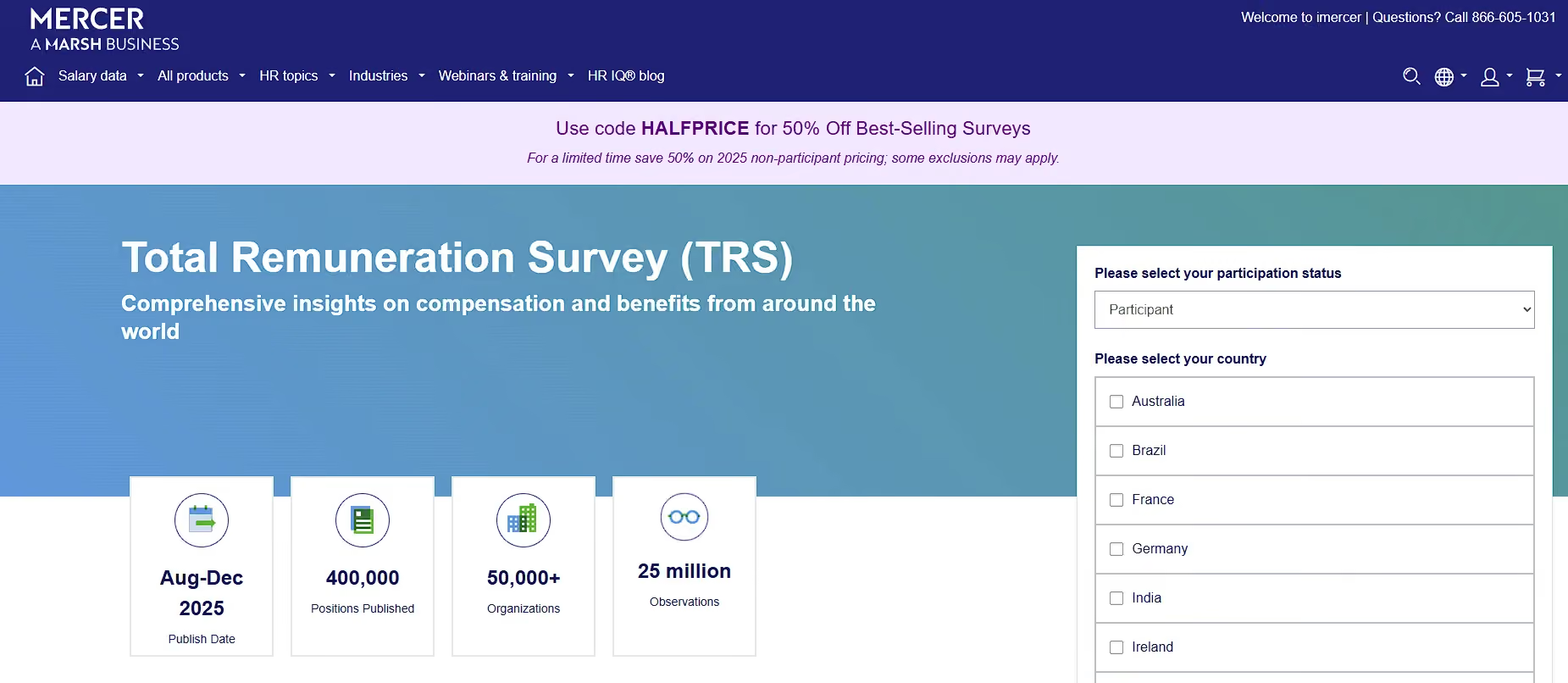
Users generally praise the data quality and the helpfulness of Mercer's consultants, with the recurring gripes being high cost and occasionally slow responses. The bigger practical issue is the work to get there: you have to map your roles to Mercer's catalogue before the data is usable. That's effort up front, and a misalignment risk if you map wrong. For a fuller comparison against live data, see our piece on Mercer salary benchmarking.
Best features
- Full total-reward dataset: base, guaranteed cash, short and long-term incentives, benefits
- Consistent global methodology across 140-plus countries via the Mercer Job Library
- Deep coverage of senior, executive and specialist professional roles
Best for
Multinational organisations that need one consistent methodology across many countries, with the reward expertise in-house to map roles and run a structured benchmarking programme, particularly in pharma, financial services, law and tech.
Not ideal for
The job-mapping overhead and enterprise pricing make Mercer more than most UK mid-market teams need. Reviewers note the sweet spot is high-value professional roles; below roughly £35,000 and in operational, hourly or fast-moving roles, the catalogue and the annual cycle both start to show.
Willis Towers Watson - Best for: formal pay governance and global pay structures
Willis Towers Watson, or WTW, is the survey provider I get asked about most. It covers similar ground to Mercer on the data, but teams reach for it when they need formal pay governance, remuneration-committee reporting and the detail of executive and long-term incentive arrangements. If a board needs an auditable, brand-name source behind its pay decisions, WTW carries that weight.
The cost shows up in participation and extraction. Teams describe spending the better part of a month pulling data into spreadsheets and cross-checking figures, with manual job mapping that carries its own misalignment risk. Users trust the underlying data quality but call the tool complicated and time-consuming to work through. For teams with the resource to run that process properly, the granularity and sector focus justify it.
Best features
- Strong executive, incentive and long-term bonus data for formal pay governance
- Auditable, brand-name source suited to remuneration-committee reporting
- Robust global survey coverage across 130-plus countries
Best for
Large organisations that need a credible, auditable survey source for board-level pay governance and have the reward function to run survey participation as a grading and levelling underpin.
Not ideal for
The month-of-spreadsheets reality and enterprise cost are overkill for a mid-market team with 40 to 50 roles to benchmark. Coverage thins in smaller markets and for operational or fast-moving roles, and the annual cycle means you're often working from last year's market.
Brightmine Compensation Planning - Best for: structured UK salary banding for pay architecture
Brightmine, formerly Cendex, is the survey-led UK specialist, built on employer-reported data and now under the LexisNexis Brightmine brand. Its distinct strength is structured salary banding for building pay structures, and its compensation data refreshes every 30 days rather than annually, a real freshness edge within the survey category.
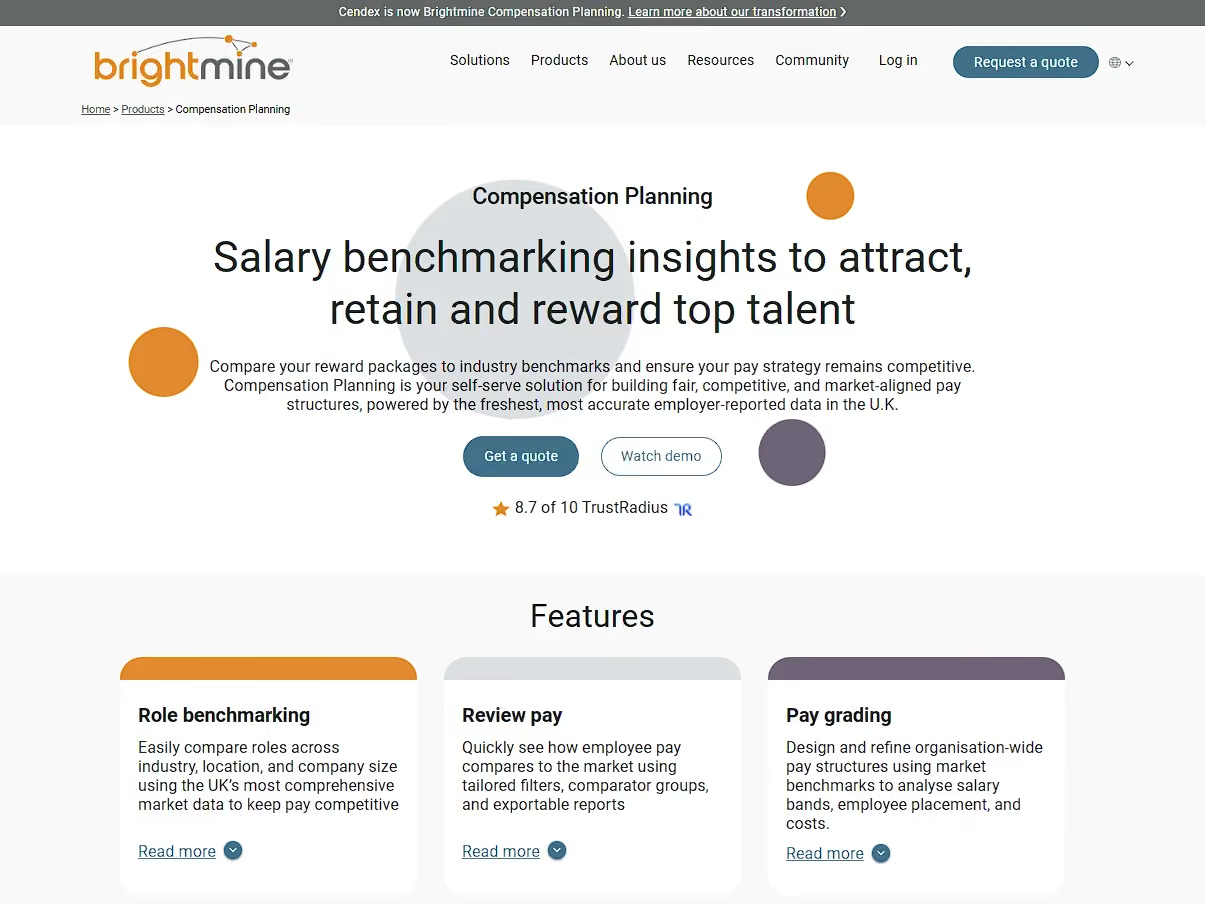
Users are generally positive on data confidence for established roles, and find the platform straightforward for standard benchmarking. One reward consultant described the job categorisation and levels as well aligned to the modern workplace, with benchmarking faster because titles filter cleanly for comparison. The recurring caveat is the model. Employer-reported data, not an HRIS feed, can carry reporting inconsistencies, and coverage thins for niche or specialist roles. We cover the detail in our Brightmine comparison.
Best features
- Structured UK salary banding built for designing pay architecture
- Monthly data refresh, fresher than the annual survey norm
- Strong sector banding under the long-established Cendex dataset
Best for
UK reward teams building or reviewing formal salary bands and pay structures, who want employer-reported banding with a fresher cycle than the big annual surveys and value structure over a live market view.
Not ideal for
Teams that need a real-time market read won't get it from monthly submitted data, and niche or specialist roles can come up short. The Compensation Planning module is also excluded from Brightmine's free trial, so you can't fully test the part that matters before committing.
Ravio - Best for: real-time pay data in tech and high-growth teams
Ravio benchmarks pay using connected payroll data from member companies, with a strong lean towards tech and high-growth businesses across Europe and the UK. Its distinct strength is the live HRIS sync. Users single out the ease of use and the automatic job levelling, where you connect your HR system and Ravio's team maps your roles rather than you redoing job codes by hand.
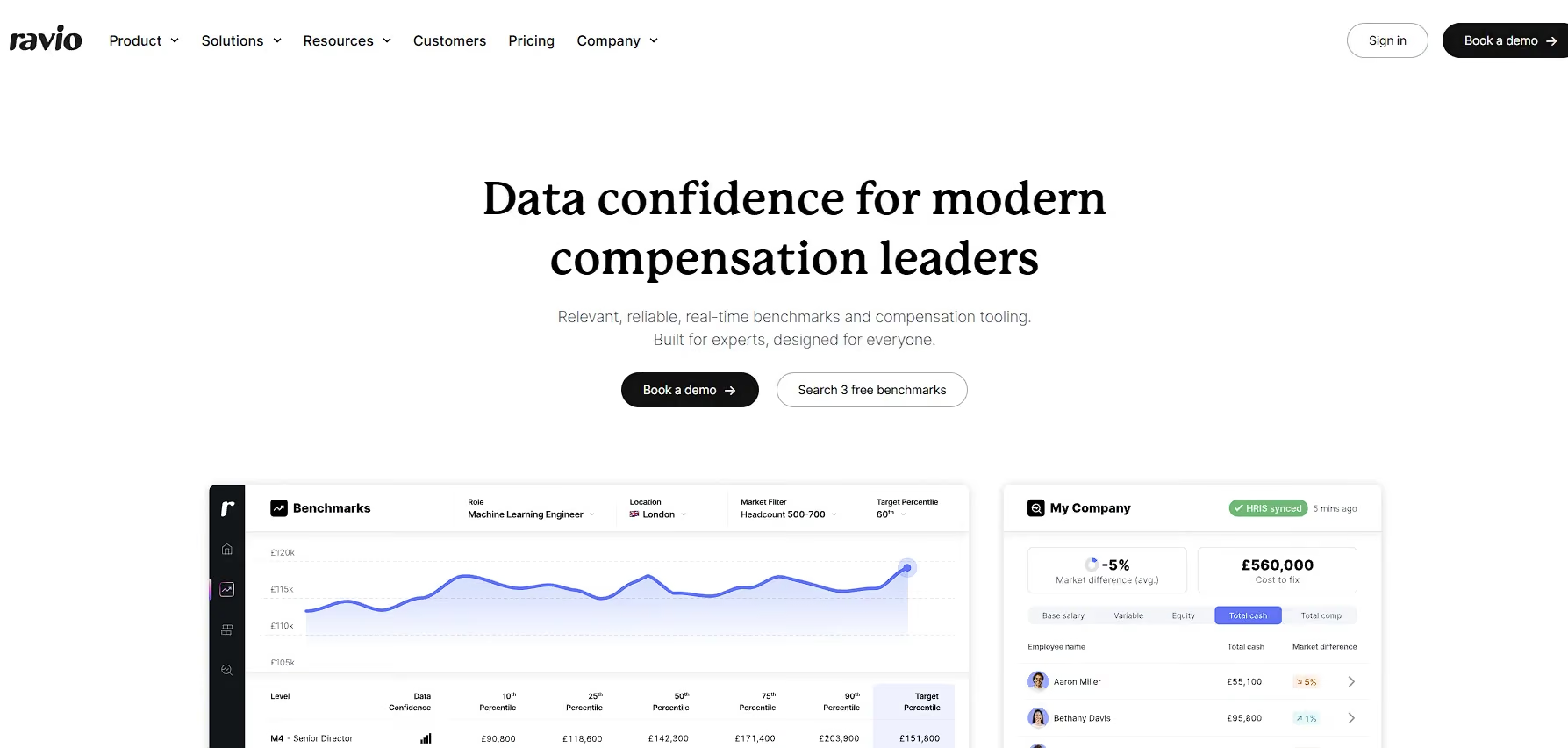
Users are just as clear about where Ravio stops, which makes this a question of fit. The most common complaint is thin data for specific roles and countries, with some teams reporting they stay on the free version because there isn't enough data in their market yet. A fast-scaling tech company can live with that. A UK retail or logistics employer can't, because the roles you hire in volume are exactly the ones Ravio covers least.
Best features
- Real-time benchmarks from connected member payrolls, including equity and benefits
- Automatic HRIS sync and job levelling, praised by users for low setup effort
- Strong, current coverage of tech and high-growth roles across the UK and Europe
Best for
Venture-backed and high-growth tech companies that recruit within the tech talent market and want live, payroll-sourced benchmarks with built-in comp-review tooling.
Not ideal for
Mid-market employers outside tech will hit the coverage gaps reviewers describe. If you're benchmarking warehouse, retail, transport or other operational roles, the sample isn't built for your market.
Playroll – Best for: pay and cost data when hiring somewhere you have no entity
Playroll is a global payroll and Employer of Record platform, and its pay data sits alongside that rather than being the product you buy. Two tools are free: a benchmarking tool returning average, high and low pay by job title, seniority and location, and a cost calculator breaking a hire into gross pay, employer contributions and total cost.
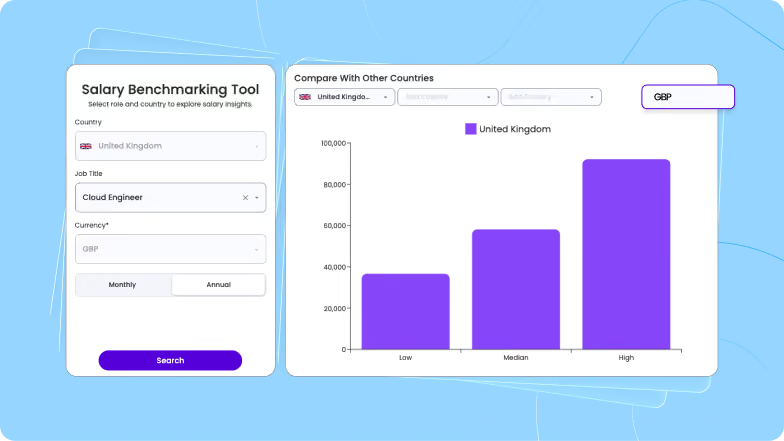
The benchmarking draws on recent job adverts from Glassdoor, LinkedIn and local research, so it reads the live market rather than an annual survey cycle. That makes it a quick way to sense-check pay in a market you do not operate in yet.
Best features
- Free salary benchmarking by job title, seniority and location, with filters for role, region and industry
- Free cost calculator covering 180+ countries, comparing up to three markets side by side
- Employer of Record service, so a benchmark in a new market has a compliant route to hiring there
Best for
UK and international employers making their first one or two hires in a country where they hold no entity, who want a free read on market pay and total employment cost before committing.
Not ideal for
Reward teams running a UK pay review. Playroll does not publish its UK dataset depth, there is no sector or seniority granularity to interrogate, and there is no HRIS integration to compare a benchmark against your own employees. The tools are built to price a hire in a new market rather than to evidence pay across an existing workforce.
Other PayScale alternatives worth knowing
A couple of other names come up often, though neither suits a UK mid-market team as a primary tool. Salary.com is a large US-centric platform with the same UK-coverage caveat as PayScale. Glassdoor offers crowdsourced pay data that's fine for a rough sense check, but it's self-reported and unstructured, so it won't stand up as a defensible benchmark for a pay review. Treat both as supporting reference, not the figure you build a decision on.
Why UK HR teams look for PayScale alternatives
PayScale built its reputation on a large crowdsourced salary dataset paired with compensation management software, all built for the US market. For a UK HR or Reward lead at a 200 to 1,000 person business, two gaps surface quickly, and neither is really a flaw in PayScale. They're a consequence of where it was built and who for. If your roles, locations and budget are British, both land on you.
Limited UK data coverage
PayScale's strength is North American and large-enterprise data, and its UK coverage thins out fast once you move off the common roles. The data isn't always granular enough for niche or specialised positions, which is exactly where a UK operational benchmark needs depth. In our own testing in May 2026, a standard UK job and location combination, the kind a logistics or retail employer benchmarks every week, returned no usable result.
Those operational and regional roles are the ones you hire in volume, where a few hundred pounds either way decides whether an offer lands. Getting a salary adjustment right comes down to local data PayScale doesn't reliably hold.
US pricing in a UK market
PayScale doesn't publish a UK pricing page, so UK buyers are quoting in dollars from the start. PayScale keeps its pricing behind a sales conversation, but independent buyer data from Vendr puts the average contract at around $27,000 a year, rising to $120,000 at the top end.
That's a lot to commit for a dataset that gets patchy on the roles you most need to benchmark. Currency exposure on a multi-year contract doesn't help either.
Match your team to the right benchmarking tool
Use this as a quick UK Benchmarking Method Matcher. Run four inputs, organisation size, sector, data-freshness need and budget, against each tool's UK coverage, methodology and pricing, and the shortlist falls out fast.
Start with the roles you benchmark most:
- Operational and regional roles in volume, in retail, transport, logistics or hospitality: lead with live job advert data for a current number you can defend, and bring in a survey house only for the senior layer.
- Senior, executive or total-reward roles across multiple countries, in finance, insurance, pharma or professional services: start with Mercer or WTW, then use live data to fill the operational gaps.
- A fast-scaling tech or high-growth team: a payroll-sourced tool built for the tech market will fit those roles best.
Then sort on freshness, budget and size:
- Need a current read because your market is moving: live data beats an annual survey cycle.
- Stable roles, UK sector cuts, a fixed monthly cost: Croner is the predictable option.
- Building or rebuilding formal pay bands: Brightmine is built for that.
- Board-level pay governance on an enterprise budget: WTW carries that weight.
For most mid-market teams of 200 to 1,000 without a dedicated reward function, the honest answer is live data for the bulk of your roles, topped up by a survey house where the roles turn senior.
FAQs
What companies are similar to PayScale in the UK?
Companies similar to PayScale for UK salary benchmarking include HR Datahub, Croner SalarySearch, Mercer, Willis Towers Watson and Brightmine. The key split is methodology: HR Datahub uses live UK job advert data, while Croner, Mercer, WTW and Brightmine use employer-submitted survey data on various refresh cycles.
Are Payfactors and PayScale the same company?
Payfactors and PayScale are now the same company. PayScale and Payfactors combined in March 2021 to form a single compensation data business, which is why UK searchers still come across both brand names.
What kind of company is PayScale?
PayScale is a US-headquartered compensation data and software company. It combines a large crowdsourced salary dataset with compensation management tools, and is aimed primarily at US compensation teams, which is the root of its UK coverage and pricing gaps. Its current CEO is Chris Hays, appointed in January 2024.
How accurate is PayScale for UK salary data?
PayScale's UK accuracy depends heavily on the role. Common head-office roles are reasonably covered, but its depth is strongest in North American and large-enterprise markets, and coverage thins for niche or operational UK roles. In our own testing in May 2026, a standard UK job and location combination returned no usable result. For UK-specific benchmarking, a UK-first dataset gives you more reliable coverage.
Start with the data that fits your market
The right benchmarking tool is the one whose dataset covers your roles, locations and sector at a price you can justify. For a UK mid-market team, a tool built for the US market starts you off in the wrong place however polished it looks.
A benchmark that's off by a few hundred pounds on a high-volume role, multiplied across every hire, is real money and real retention risk. Start with the data that reflects your market today, so the pay decisions you make are ones you can stand behind when they're questioned. You can explore our salary benchmarking tools to compare the options, or book a call to talk your roles through with our salary experts and find out whether HR Datahub is the right fit.
LATEST WEBINAR
.avif)
Guides, templates and tools to help you approach pay with more confidence, clarity and consistency.


Read through more blogs
%2520(1).avif)










.avif)



.avif)
.avif)



.avif)







.avif)



.avif)
.avif)
.avif)
.avif)
.avif)
.avif)
.avif)
.avif)