Best Salary Benchmarking Companies in the UK


42% of UK employers planned flat-rate pay awards for 2026, according to our 2026 Pay Trends Survey of more than 200 HR and Reward leaders. Flat-rate budgets concentrate pressure on getting the absolute numbers right; there's nowhere for a wrong benchmark to hide.
Here we’ll compare the nine main UK providers covering four data source types - the right fit depends on your size, sector, and how fresh you need your data to be.
HR Datahub publishes this article and is featured in the list.
The UK's best salary benchmarking companies at a glance
The UK salary benchmarking market splits into four data source types, each with different freshness, depth, and cost profiles. Here's how the nine providers compare.
How to choose the best salary benchmarking companies
Before picking a provider, pin down what you actually need. Four criteria matter more than the others.
- Data source and freshness. Survey data tells you what employers reported last year. Live job-advert data tells you what employers are offering this week. Setting bands for the year and making an offer this afternoon need different data sources.
- UK coverage depth. Some providers run a global survey with a UK subset. Others run UK-first datasets. For UK-only operations, depth at the regional and sector level matters more than country breadth.
- Pricing model. Quote-based (Mercer, WTW, Korn Ferry, Brightmine, Paydata), subscription (Croner SalarySearch from £149 a month, HR Datahub), or free (Michael Page, Hays). Match this to how often you actually need to benchmark.
- Total reward versus base pay. Survey providers give you base, bonus, benefits, and long-term incentives in one number. Live data gives you advertised base pay. If you need total reward, plan to use both.
The best salary benchmarking companies in the UK (2026)
Each entry below is honest about fit and limits, ours included. None of these is a universal answer. The right choice depends on three things: your organisation's size and sector, the seniority of the roles you're benchmarking, and the data freshness the decision demands.
HR Datahub - Best for: live UK market data for operational and mid-management roles
HR Datahub is what I built because UK HR teams needed current market data they could actually stand behind when making pay decisions. We collect over 30,000 fresh UK job postings daily against a back-catalogue of more than 30 million historical adverts; no submissions, no annual cycle, and you can now level roles across six distinct seniority levels in the platform. Our salary benchmarking guide walks through how the methodology works in practice.
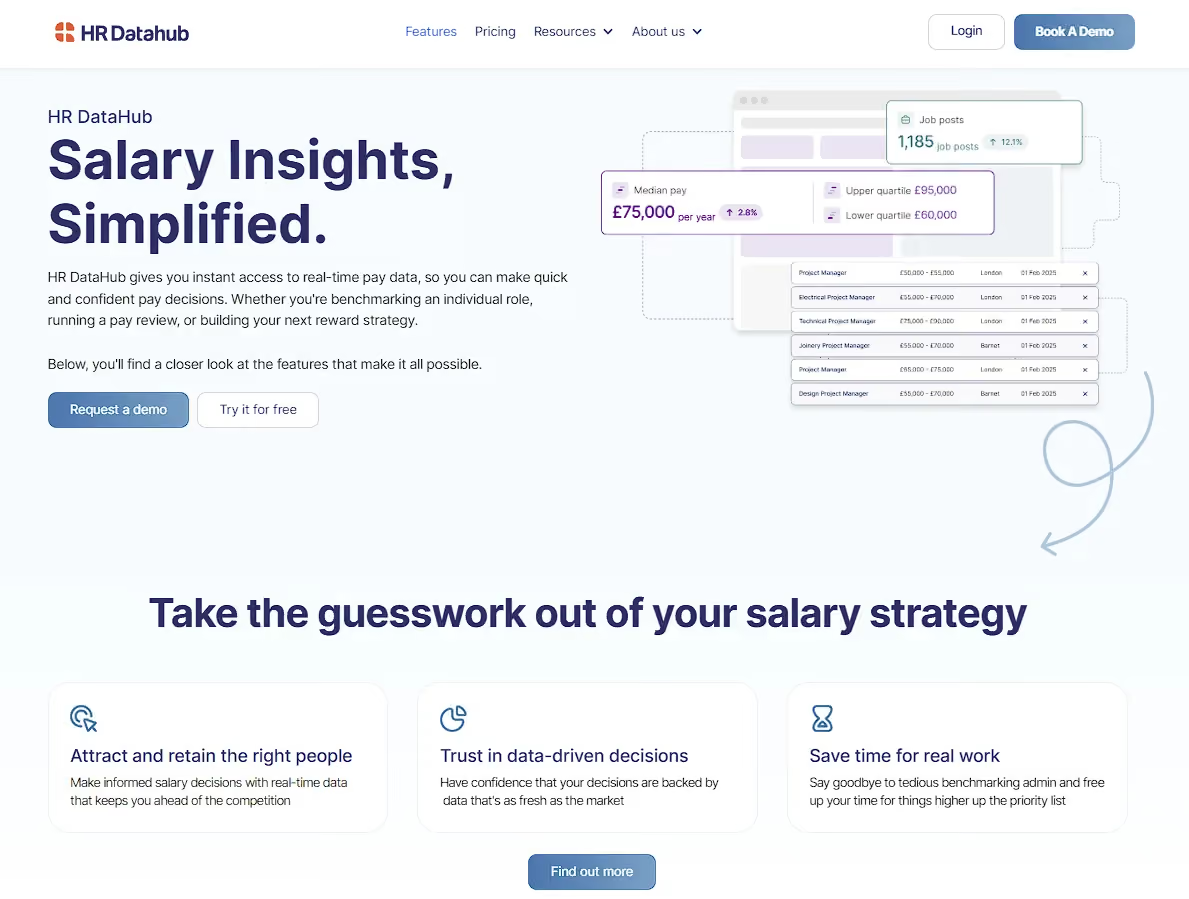
The honest limit: this is advertised pay data, not in-position payroll, UK-only by design. The right evidence to stand behind offer-setting, recruitment, and pay-review decisions; not the right source for total reward or executive packages.
Best features
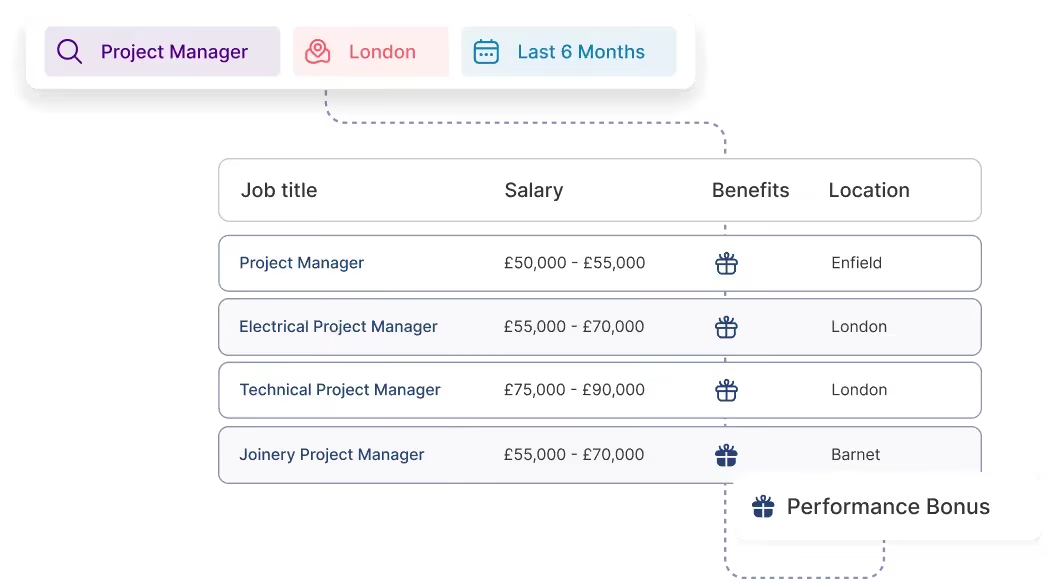
- Daily refresh from 30,000-plus live UK job postings, against 30 million-plus historical adverts
- Filters by job title, location, sector, and company size across 1,000-plus UK locations
- Median, lower, and upper quartile ranges with trend data over time, exportable for stakeholders
- Job levelling built in across six seniority levels, scored from the advert, so roles map to a consistent structure without a formal job-evaluation exercise
Best for
UK mid-market HR and Reward teams that need current, defensible data to run pay reviews, set offer levels, or stress-test proposals against the live market. Operational and mid-management roles where advertised pay reflects the current recruitment market; see our pricing for subscription detail.
Not ideal for
Senior executive benchmarking, total reward including equity and long-term incentives, or anyone hiring outside of the UK.
Mercer - Best for: global coverage of senior and executive roles
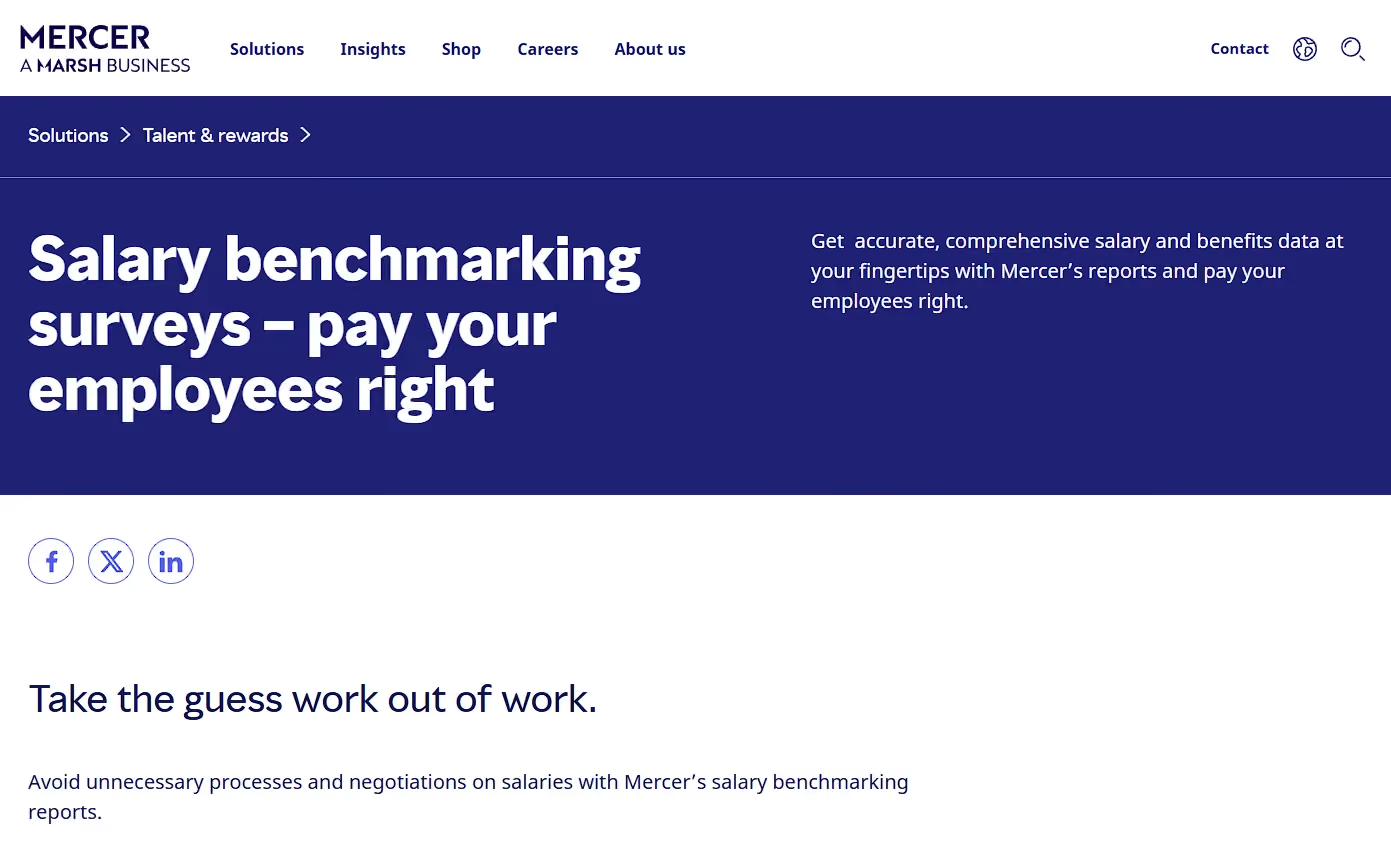
Mercer is the heavyweight in traditional total reward survey data. The flagship Total Remuneration Survey covers 140-plus countries with employer-reported base, bonus, benefits, and long-term incentives in one dataset. Roles match against the Mercer Job Library through the Data Connector submission process.
Best features
- Total Remuneration Survey across 140-plus countries with structured methodology consistent across regions
- MarketPricer self-service at $300 per job benchmark; full TRS participation priced by quote
- Mercer WIN platform for filtering and analysing results, plus annual peer-benchmarking meetings
Best for
Enterprises and multinationals benchmarking senior professional or executive roles, especially in pharma, financial services, law, and technology. Strongest where high-value professional pay is the decision.
Not ideal for
Operational roles below around £35,000, UK-only mid-market organisations on a tight budget, or anyone who needs benchmarks faster than the annual survey cycle.
Willis Towers Watson (WTW) - Best for: large global enterprises managing complex reward programmes
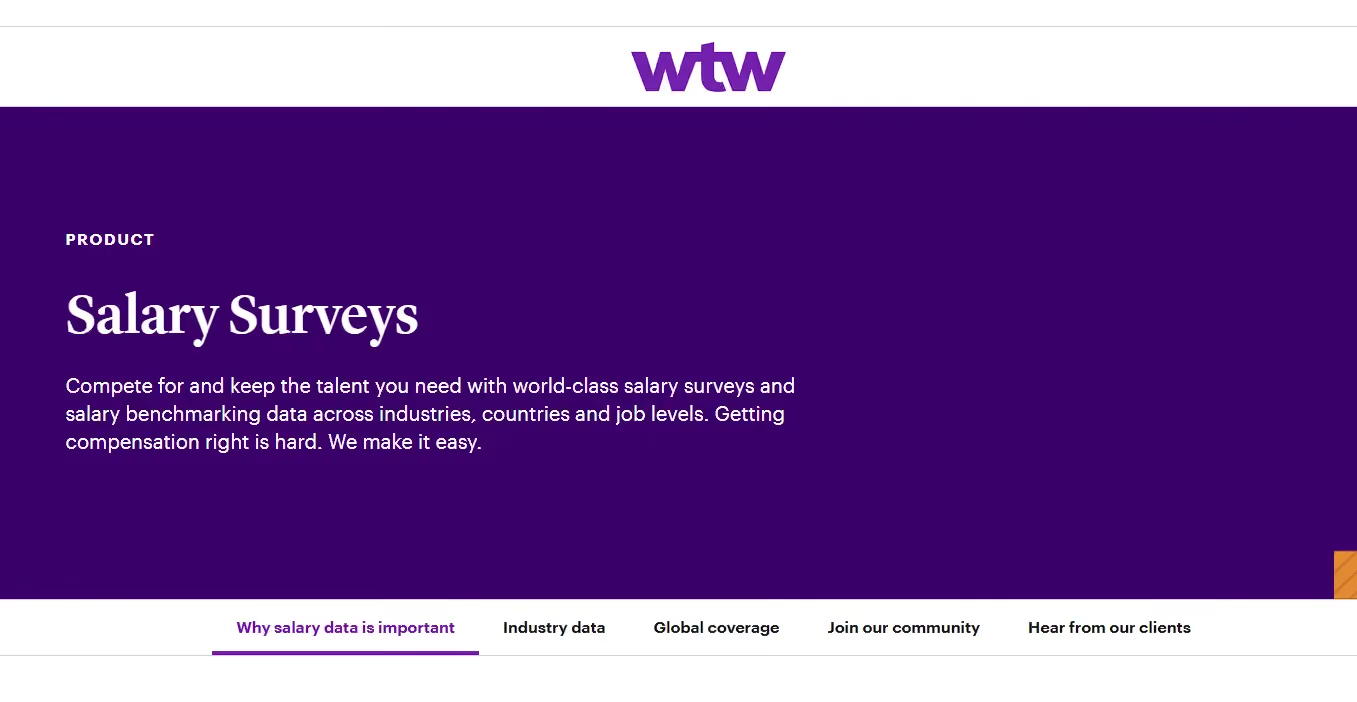
Willis Towers Watson is a global organisational consultancy offering compensation surveys, executive advisory, and pay-structure design. Most surveys operate on a give-to-get model: you submit your data, you get access. UK data is one country within a broader 140-country programme, with the depth of UK insight tracking UK participant volume.
Best features
- Salary surveys across general industry, regional, and sector-specific datasets covering 140-plus countries
- Total reward methodology spanning base, bonus, benefits, executive pay, and long-term incentives
- Reward consultancy and pay-structure design built around the data, useful where reward programmes are complex
Best for
Large global enterprises with mature Reward functions, complex pay structures, and the in-house capacity to handle survey participation. Strongest for executive and senior professional benchmarking with global consistency.
Not ideal for
Mid-market UK organisations needing fresh data fast. Pricing is quote-based with no public list, and if you're not already participating, the time and cost to access useful UK data is significant. You can see how WTW and HR Datahub compare for a side-by-side on freshness, cost, and use case.
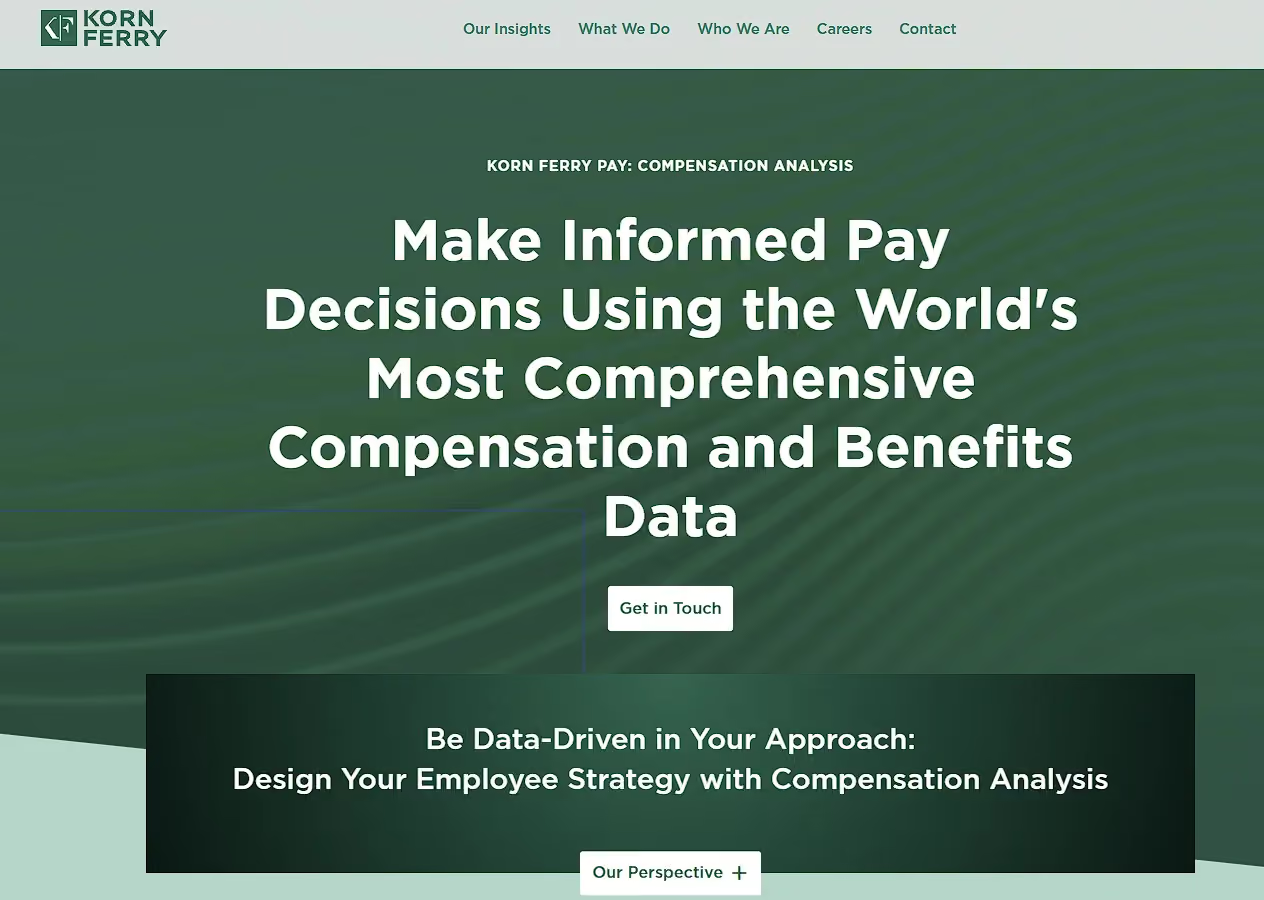
Korn Ferry Pay - Best for: organisations on the Hay grading system
Korn Ferry Pay is the survey arm of Korn Ferry, the consultancy that owns the Hay grading methodology. If your organisation already uses Hay grades, role-to-data alignment is significant: jobs map cleanly to grade structures you already operate. The dataset draws on submissions from over 32,000 companies across 150-plus countries.
Best features
- Compensation surveys covering 32,000-plus companies in 150-plus countries, aligned to the Hay methodology
- Korn Ferry Pay platform for analysis, with secure online data submission and validated methodology
- Hay grading framework built into the dataset for clean role-to-grade matching across geographies and industries
Best for
Organisations that already operate the Hay grading system, or want to align job evaluation and salary benchmarking under one methodology. Strongest for senior professional and leadership roles in larger organisations.
Not ideal for
Organisations on a different grading system, or no formal grading at all, where Hay alignment becomes additional implementation rather than value. Also a heavy lift for smaller mid-market teams without dedicated Reward resource.
Brightmine - Best for: governance-grade UK benchmarking with compliance support
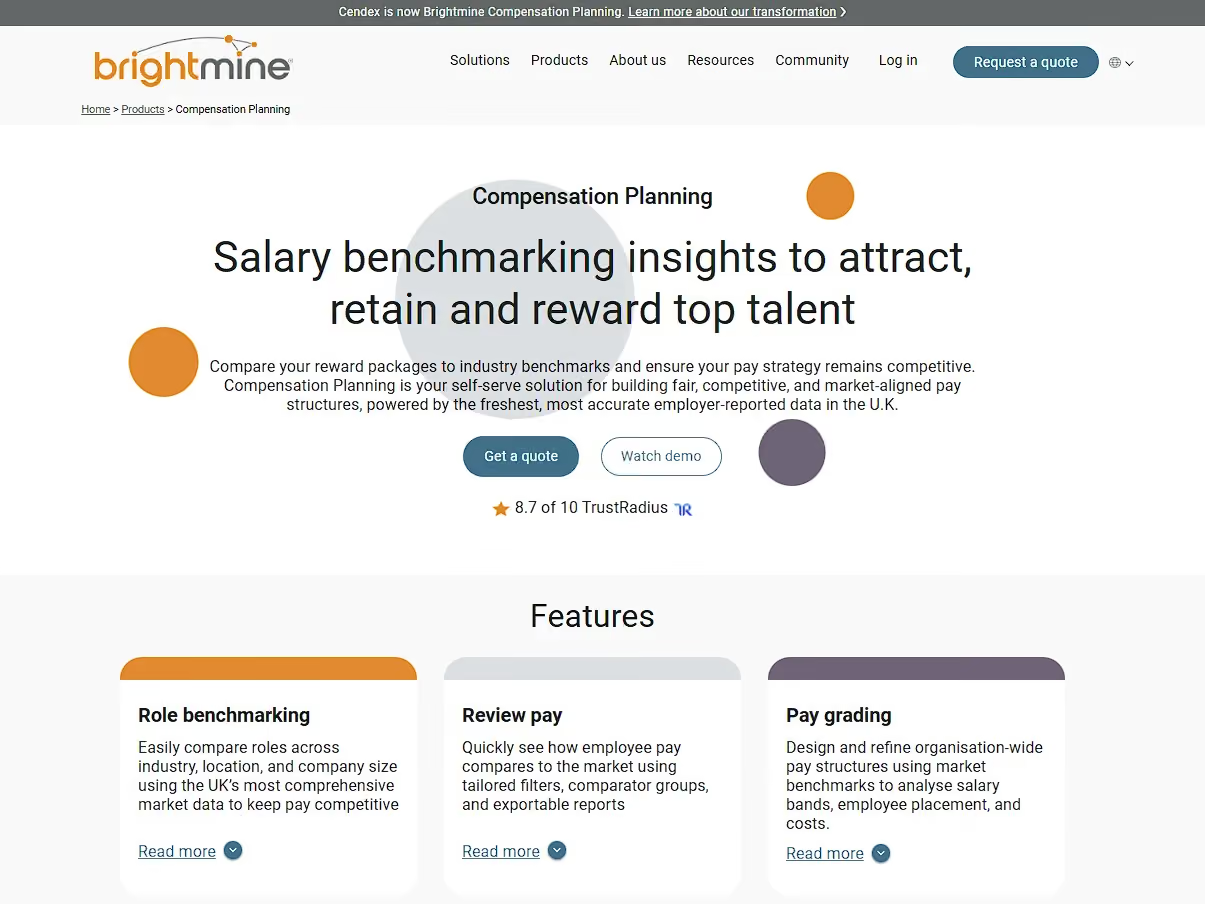
Brightmine is the UK HR compliance and pay data provider formerly known as XpertHR. Its Compensation Planning module (previously Cendex) offers 1.5 million UK employee data points across 26 functional areas, refreshed monthly rather than annually. The platform bundles benchmarking with employment law, policy templates, and pay-equity tooling.
Best features
- 1.5 million UK employer-reported employee data points across 500 job functions in 26 areas, refreshed monthly
- Compensation Planning covers benefits and allowances as well as base pay for a fuller reward picture
- Bundled with Brightmine's HR compliance, employment law guidance, and gender/ethnicity/disability pay-gap analytics
Best for
UK organisations that want pay benchmarking in tandem with compliance content, employment law, and pay-equity tooling under one subscription. Strong fit for HR generalist teams without a dedicated Reward function.
Not ideal for
Anyone hoping to test it via the standard free trial: the Compensation Planning module is excluded and requires a demo request. Real-time market signals are outside the model since data is employer-reported. You can see how Brightmine and HR Datahub compare on data source and use case.
Croner - Best for: affordable self-serve UK salary surveys
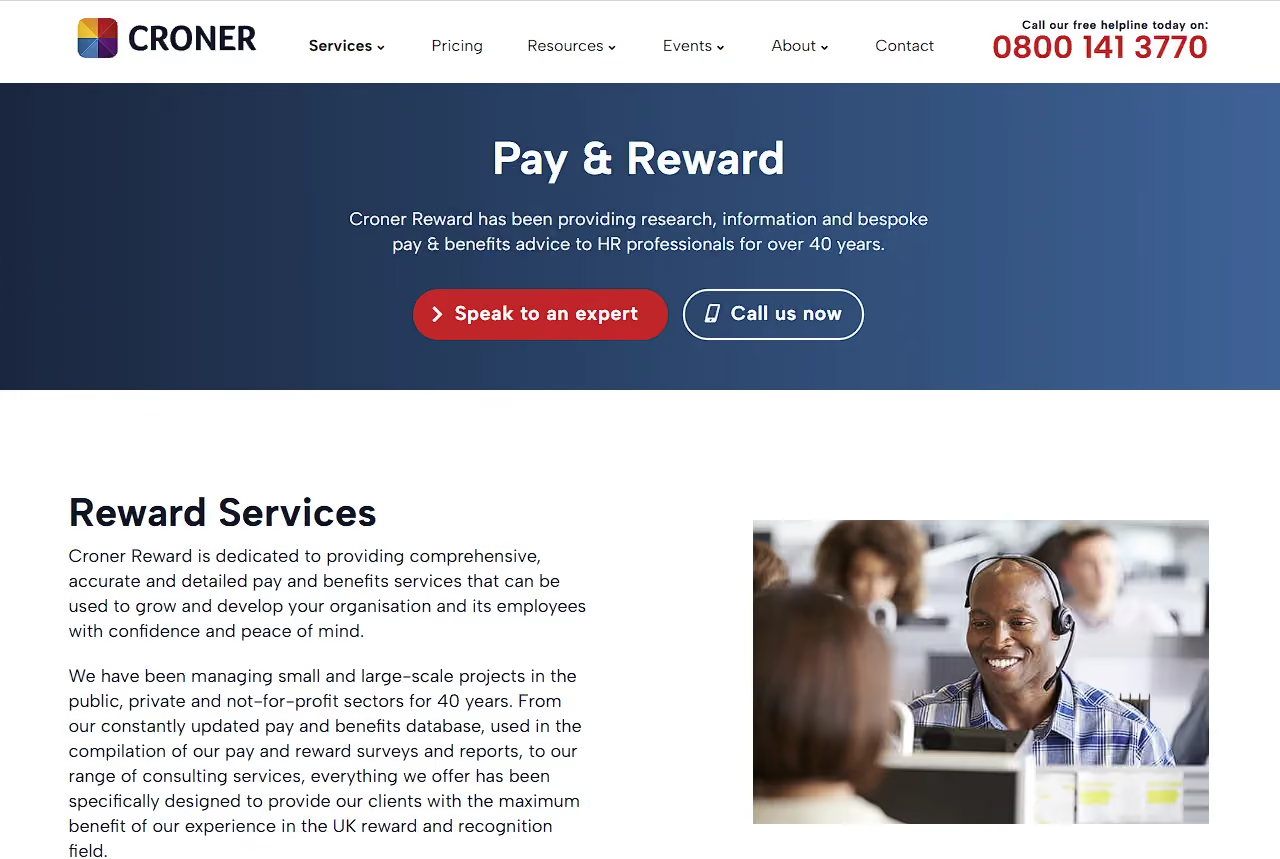
Croner Reward has supplied UK pay and benefits data for over 45 years, sitting within Croner's broader HR advisory business. SalarySearch is the self-serve tool, with 50,000-plus job records across 1,200 job titles, 34 industry sectors, and 154 UK regions; reports publish annually or bi-annually.
Best features
- SalarySearch self-serve subscription from £149 a month, with 50,000-plus job records across 34 industry sectors
- Specialist UK sector surveys for charity, care, distribution, transport, and several others, published annually
- Sits within Croner's HR advisory bundle covering employment law, health and safety, and HR consultancy
Best for
UK SMB and mid-market organisations wanting affordable benchmarking alongside broader HR support. Strong fit for traditional UK industries and smaller teams without dedicated Reward specialists.
Not ideal for
Organisations hiring internationally, tech-heavy companies with non-standard roles, or teams that need benchmarks reflecting current market conditions rather than a snapshot from the last publication cycle.
Paydata - Best for: specialist UK sector surveys not covered by generalist providers
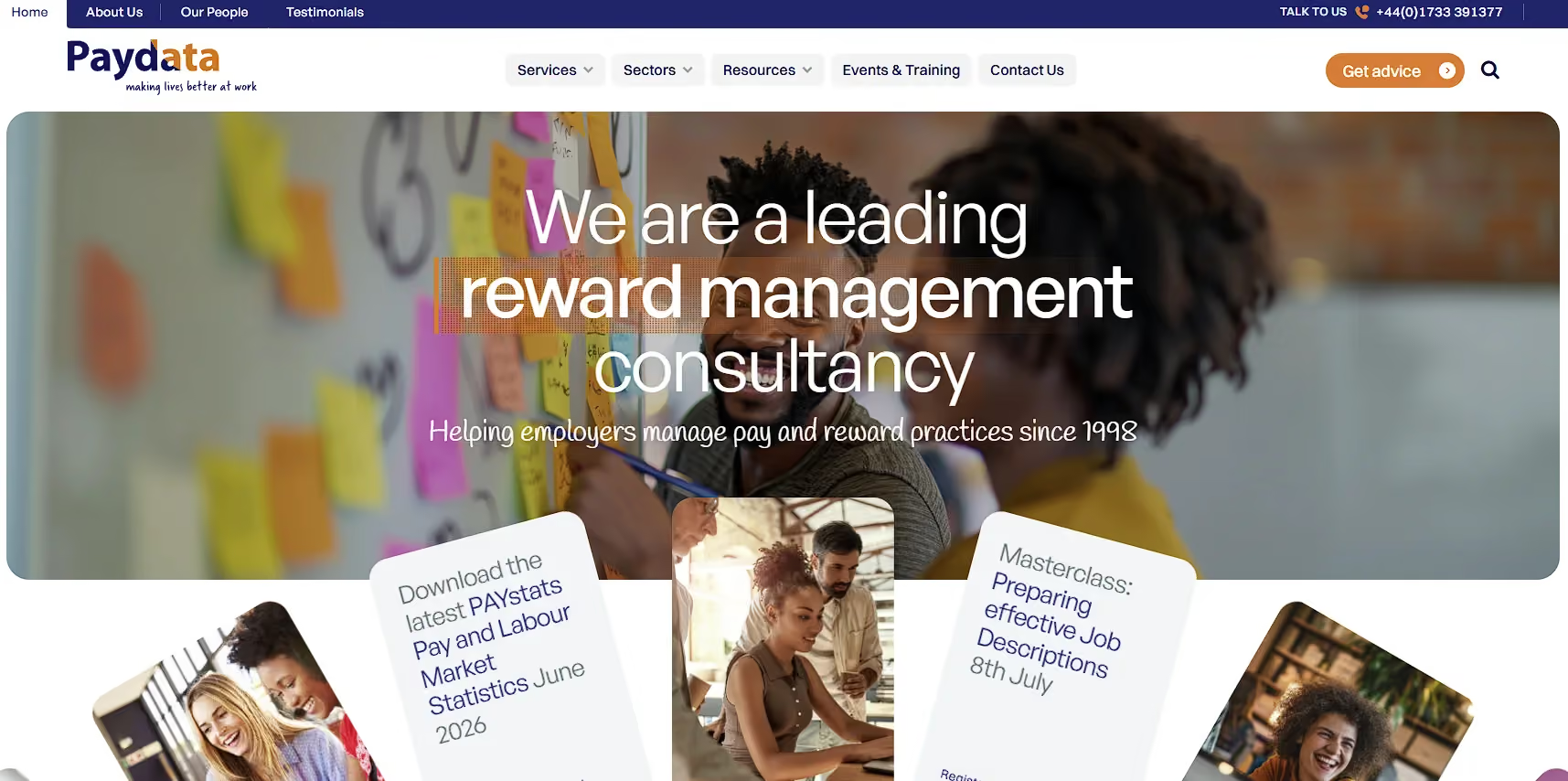
Paydata is an independent UK reward management consultancy with 25 years in the market. Its industry salary surveys cover construction and civil engineering, mechanical and electrical, house building, housing associations, healthcare, residential care, facilities management, professional associations and institutes, and purpose-built student accommodation.
The utilities sectors (electricity, renewable energy, water) are covered separately, plus a Support Services Survey for HR and finance functions and bespoke surveys on commission; pricing is by enquiry.
Best features
- Standing UK industry salary surveys across construction, M&E, housing, healthcare, residential care, facilities management, professional associations, PBSA, and the utilities sectors
- Support Services Survey for HR and finance functions across sectors, plus bespoke survey work on commission
- Reward consultancy to complement the data: job evaluation, pay-structure design, equal pay reviews, executive pay benchmarking
Best for
UK organisations in construction, property, healthcare, housing, the utilities, or the professional associations and charity sector, where generalist surveys lack the peer-group depth you need. Strongest fit where you need defensible, sector-specific peer comparisons rather than broad-market averages.
Not ideal for
Mid-market UK organisations in retail, logistics, hospitality, or transport: the standing industry surveys concentrate elsewhere, and you'd be commissioning a bespoke piece of work instead. Also not the right fit if you want self-serve, instant access, or transparent pricing without an enquiry call.
Michael Page - Best for: free tools and guides for finance, marketing, legal, and professional services
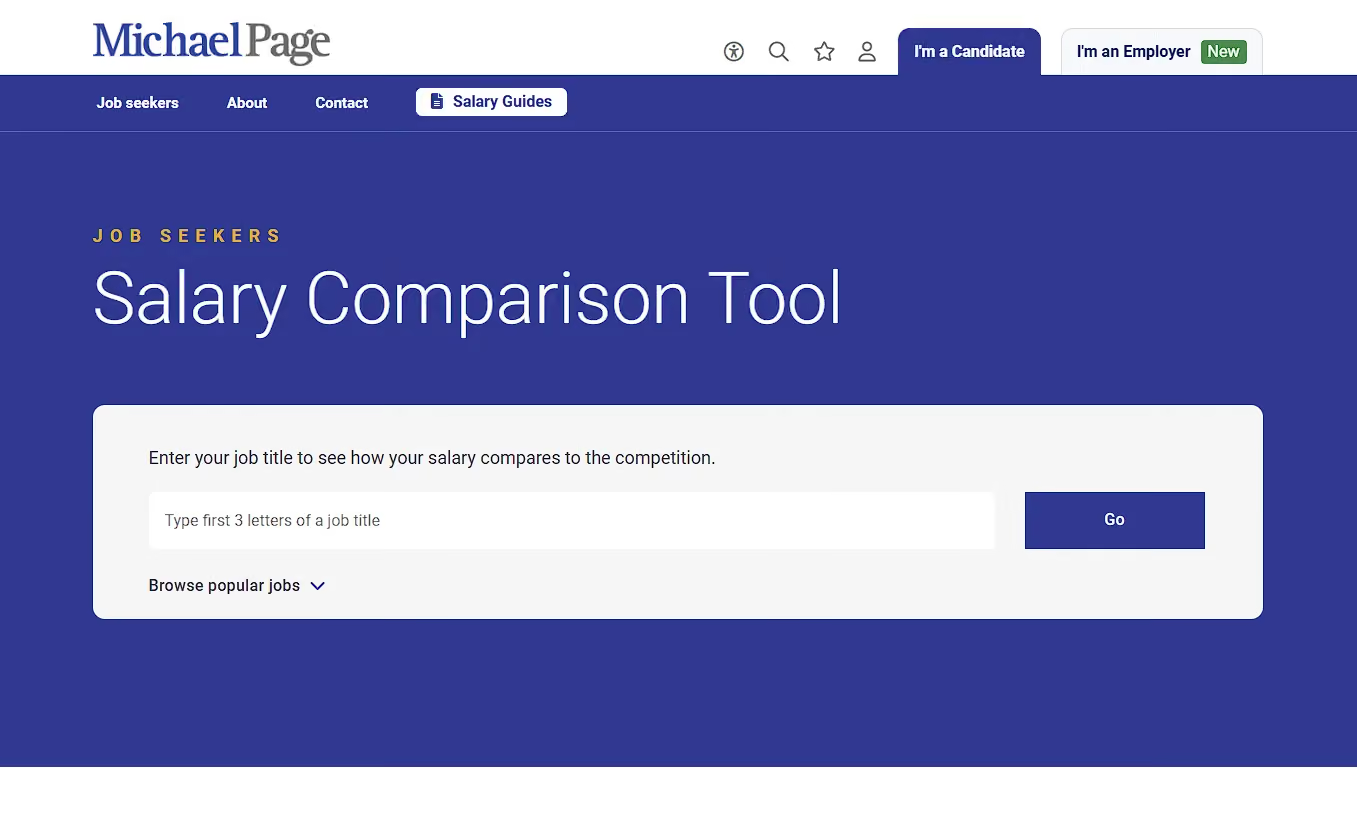
Michael Page is a global recruitment agency that publishes free UK salary guides as part of its candidate and client attraction. The guides cut by function, with deepest coverage in finance, marketing, legal, technology, HR, and professional services. Data comes from a mix of agency placements and advertised salaries.
They offer a free salary checking tool, though it's limited to specific job titles, and based on a 12 month average of salary offers from their own job ads.
Best features
- Free UK salary guides across finance, marketing, legal, technology, HR, and professional services
- Sector and region cuts with year-on-year commentary on supply and demand
- Downloadable PDFs and on-page interactive tools depending on the function
Best for
HR generalists and hiring managers wanting a free directional sanity check on professional and managerial pay, particularly in finance, legal, and marketing. Useful as a cross-reference rather than a primary source.
Not ideal for
Formal pay reviews, salary band design, or any benchmarking process where data provenance and methodology need to stand up. Free guides aren't a substitute for a structured peer-group cut.
Hays - Best for: free sector guides for technology, construction, healthcare, and education
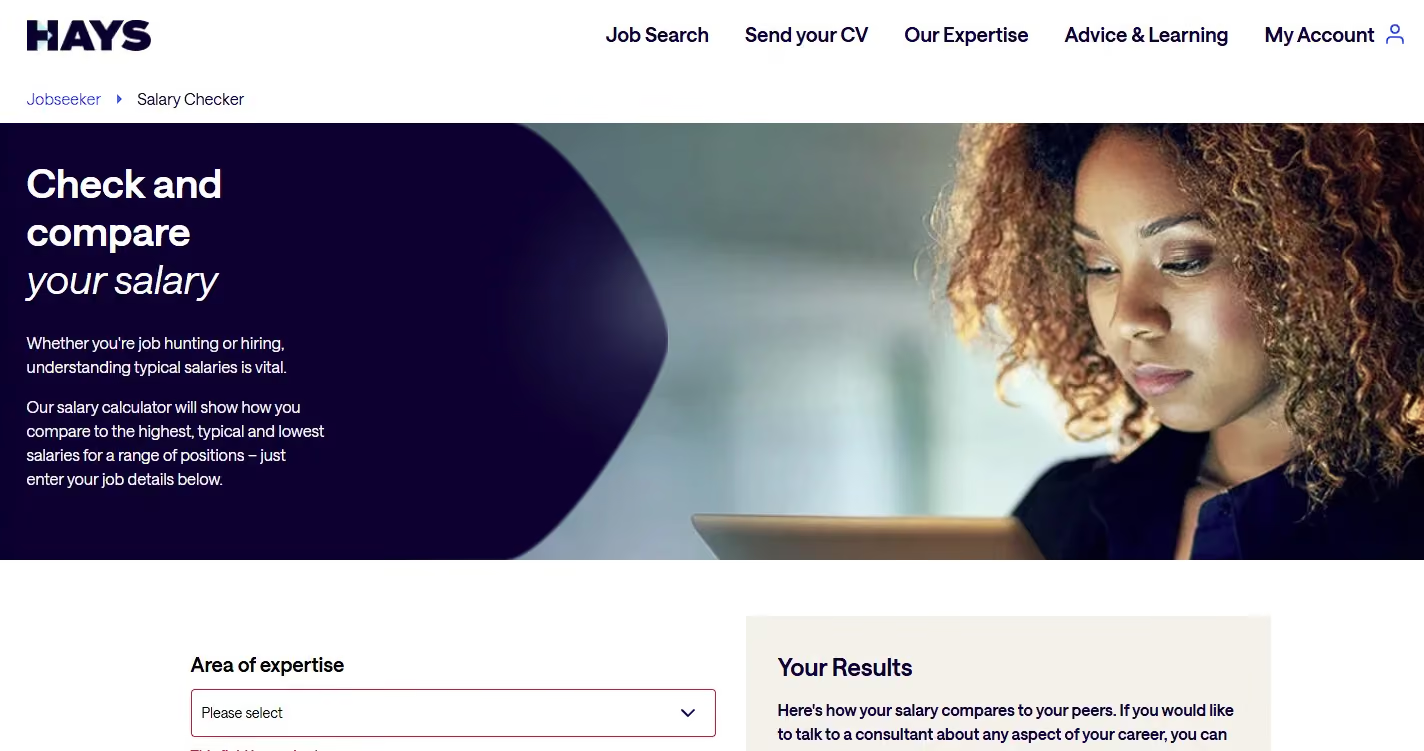
Hays is one of the UK's largest specialist recruitment firms, with strength in technology, construction, healthcare, education, and engineering. Like Michael Page, Hays publishes free annual salary guides drawn from its own placement data and recruitment intelligence. The Hays Salary Checker gives instant role-by-role pay ranges without a download, but it is limited to London, Scotland, and the South East only.
Best features
- Free annual UK salary guides across technology, construction, healthcare, education, and engineering
- Hays Salary Checker for instant role and region pay ranges, with no email gate
- Recruitment-led market commentary to accompany the numbers, useful for context on supply and demand
Best for
HR generalists or hiring managers wanting a quick, free, sector-relevant pay check before a formal benchmarking exercise. Strongest in the sectors Hays recruits most heavily.
Not ideal for
Pay-review-grade analysis, defensible salary band design, or benchmarking outside the sectors Hays specialises in. A useful starting point, not a final answer.
Using salary benchmarking data sources together
Pulling salary data from more than one source needs three things: clarity on the decision, the source types available, and tolerance for numbers that won't always agree. The process produces a defensible range, not a single number. With that range in hand, you can argue pay decisions on evidence rather than gut feel.
Traditional surveys (Mercer, WTW, Korn Ferry, Brightmine, Croner, Paydata) work best for total reward, pay-structure design, and roles where annual data still reflects reality. Live market data (HR Datahub) fits offer-setting, retention conversations, recruitment-led pay reviews, and operational roles in volatile markets. Free recruitment guides (Michael Page, Hays) work as directional sanity checks before a more structured exercise, not as a substitute for one.
Frequently asked questions
What is the difference between salary benchmarking companies and salary benchmarking tools?
Salary benchmarking companies are the providers: consultancies and platforms that source and publish pay data. Salary benchmarking tools are the software those providers deliver the data through. Mercer is a company, Mercer WIN is its tool, and the distinction matters for procurement, not the data itself.
How much do salary benchmarking services cost in the UK?
Salary benchmarking pricing varies widely by provider type and data scope. Michael Page and Hays salary guides are free; Croner SalarySearch starts at £149 a month; HR Datahub publishes its subscription pricing openly, starting well below traditional survey costs, so you can weigh the cost against the pay decisions it supports. Mercer, WTW, Korn Ferry, Brightmine, and Paydata are all quote-based, with pricing scaling by data scope, geography, and participation level.
Do salary benchmarking companies require you to submit your own data?
Salary benchmarking companies vary on this: most traditional survey providers (Mercer, WTW, Korn Ferry, Croner, Paydata) operate a give-to-get model where you submit your own pay data to access the dataset. Brightmine collects employer-reported data but without a strict participation requirement. HR Datahub, Michael Page, and Hays don't require any data submission at all.
Start with the data you can access today
The right benchmarking provider isn't the one with the most data; it's the one that answers the questions you're asking with data fresh enough to defend.
For most UK mid-market HR teams, a live market source covers regular decisions like offer-setting, pay reviews, and retention on its own. A survey source is worth adding mainly where total reward or executive benchmarking is the question, which is more often an enterprise need than a mid-market one.
Before committing to a paid subscription, see what live UK data does for the roles you actually benchmark most. The way to find out is to put your five most recurring pay questions into HR Datahub's salary insights platform and judge whether the answers stand up against current market reality. You can book a call to talk your questions through with our salary experts and find out whether HR Datahub is the right fit. Most teams can see for themselves whether the data answers the questions they're actually asking.
LATEST WEBINAR
.avif)
Guides, templates and tools to help you approach pay with more confidence, clarity and consistency.


Read through more blogs
%2520(1).avif)










.avif)



.avif)
.avif)



.avif)







.avif)



.avif)
.avif)
.avif)
.avif)
.avif)
.avif)
.avif)
.avif)